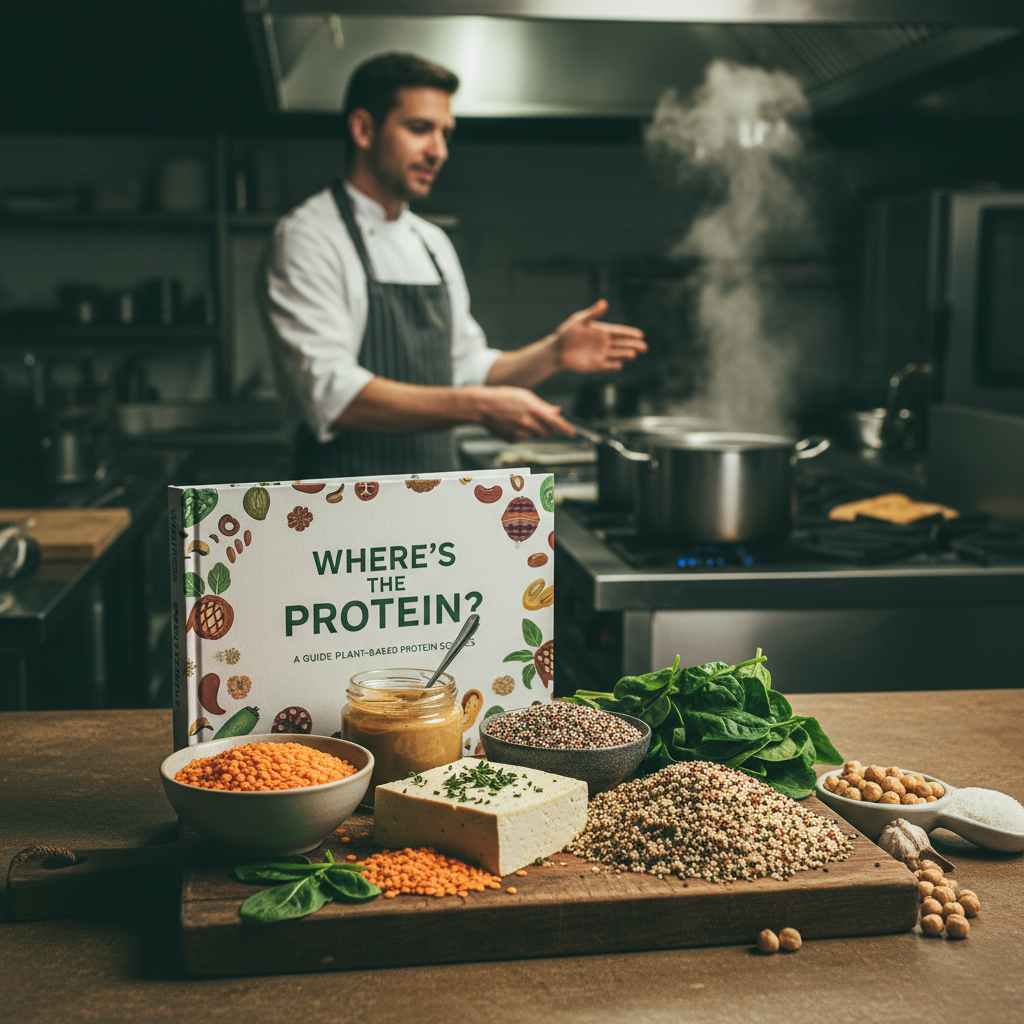
Where's the Protein? A Guide to Plant-Based Protein Sources
"But where do you get your protein?" It's the classic question for anyone embracing a plant-forward lifestyle. The great news is that the plant kingdom is brimming with powerful, delicious, and diverse vegetarian protein sources. From hearty legumes to versatile soy products, getting all the protein you need is far easier and more enjoyable than you might think. A well-planned vegetarian diet is not about restriction; it's about abundance and exploring a new world of flavours and textures.
At its core, a thoughtful vegetarian diet is linked to numerous advantages. If you're curious about the broader impact, you can learn more about the benefits of a vegetarian diet in our other post. For now, let's focus on mastering protein.
The Essential Role of Protein in a Healthy Diet
Before we jump into the 'what,' let's quickly cover the 'why.' Protein is a macronutrient essential for virtually every process in your body. It's made up of building blocks called amino acids, which are critical for:
- Building and Repairing Tissues: From muscle and bone to skin and hair, protein provides the structural framework.
- Enzyme Function: Most enzymes, which speed up chemical reactions in the body, are proteins.
- Hormone Regulation: Many hormones, like insulin, are proteins that help coordinate bodily functions.
- Immune Response: Antibodies that fight off viruses and bacteria are made of protein.
- Transport and Storage: Proteins carry atoms and small molecules within cells and throughout your body.
Without adequate protein, you might experience fatigue, poor concentration, slow wound healing, and loss of muscle mass. Fortunately, hitting your daily targets on a vegetarian diet is straightforward with a little knowledge.
Your Ultimate Guide to Vegetarian Protein Sources
This is where the fun begins. The variety of protein-rich plant foods is staggering. Here’s a breakdown of the top contenders to add to your shopping list.
Mighty Legumes: The Foundation
Legumes are an affordable, fiber-rich, and protein-packed cornerstone of any vegetarian diet. They are incredibly versatile, working well in soups, stews, salads, and dips.
- Lentils: A true champion. One cooked cup (about 240g) provides around 18 grams of protein. They cook quickly and come in various colours like brown, green, and red, each with a slightly different texture.
- Chickpeas (Garbanzo Beans): The star of hummus and falafel, one cooked cup delivers about 15 grams of protein. They are fantastic roasted for a crunchy snack or added to curries and salads.
- Black Beans: A staple in Latin American cuisine, a cooked cup contains roughly 15 grams of protein. They are perfect for veggie burgers, burritos, and hearty soups.
- Kidney Beans: Famous for their role in chili, one cup packs about 13 grams of protein and a healthy dose of fiber.
Versatile Soy Products
Soybeans are one of the few plant-based complete proteins. Their versatility has given rise to several popular and protein-dense foods.
- Tempeh: Made from fermented soybeans pressed into a firm block, tempeh is a protein powerhouse with around 34 grams of protein per cup. Its nutty flavour and chewy texture make it an excellent substitute for meat in sandwiches, stir-fries, and salads.
- Tofu: Made from condensed soy milk, tofu is a culinary chameleon that absorbs the flavours of whatever it's cooked with. A cup of firm tofu contains about 22 grams of protein. It can be scrambled like eggs, baked until crispy, or blended into creamy sauces.
- Edamame: These are young, green soybeans, often served steamed in their pods. A cup of shelled edamame provides about 18 grams of protein and makes a fantastic snack or addition to salads.
Nuts & Seeds: Nutrient-Dense Powerhouses
Don't underestimate these small but mighty ingredients. They are high in protein, healthy fats, and other essential nutrients. Sprinkle them on everything!
- Hemp Seeds: Offering 10 grams of protein in just three tablespoons, hemp seeds have a mild, nutty taste and are great in smoothies or sprinkled over yogurt and salads.
- Pumpkin Seeds: A quarter-cup serving delivers about 9 grams of protein. They are delicious roasted or eaten raw.
- Peanuts & Peanut Butter: A classic favourite for a reason. Two tablespoons of peanut butter contain about 8 grams of protein.
- Almonds: A quarter-cup of almonds has around 7 grams of protein, making them a perfect on-the-go snack.
- Chia Seeds: With 6 grams of protein in two tablespoons, these seeds also form a gel in liquid, making them ideal for creating puddings or as an egg substitute in baking.
Grains and Pseudo-Grains
Many whole grains offer a surprising amount of protein, contributing significantly to your daily total.
- Seitan: Made from gluten, the main protein in wheat, seitan is incredibly high in protein, with about 25 grams per 3-ounce serving. Its dense, chewy texture makes it a convincing meat substitute in many dishes. Note: it is not suitable for those with celiac disease or gluten sensitivity.
- Quinoa: Technically a seed, quinoa is cooked and eaten like a grain. It's a complete protein, providing 8 grams of protein per cooked cup and a fluffy texture perfect for grain bowls and side dishes.
- Spelt and Teff: These ancient grains deliver 10-11 grams of protein per cooked cup and offer a delicious, nutty alternative to rice or pasta.
Dairy and Eggs
For lacto-ovo vegetarians, dairy and eggs are excellent, high-quality protein sources.
- Greek Yogurt: A single cup can contain up to 20 grams of protein. Choose plain versions to avoid added sugars.
- Cottage Cheese: This dairy classic is loaded with protein, with about 25 grams per cup.
- Eggs: One large egg provides 6 grams of high-quality protein and is incredibly versatile.
The 'Complete Protein' Myth: What You Really Need to Know
For years, vegetarians were told to meticulously combine foods at every meal (like rice and beans) to form a 'complete protein'—one containing all nine essential amino acids. We now know this is unnecessary.
The human body is smart enough to create its own complete proteins by pulling amino acids from the foods you eat throughout the day. As long as you consume a variety of protein sources like legumes, grains, nuts, and seeds, your body will have everything it needs. So, relax and focus on eating a diverse and balanced diet.
Practical Tips for Boosting Your Protein Intake
Incorporating these foods into your daily routine is easy. Here are a few simple strategies:
- Start Strong: Begin your day with a protein-rich breakfast, like a tofu scramble, Greek yogurt with berries and seeds, or oatmeal topped with nuts.
- Snack Smart: Ditch the empty carbs and reach for a handful of almonds, a small tub of cottage cheese, or some roasted edamame.
- Bulk Up Your Mains: Add a can of beans or lentils to your favorite soups, stews, and pasta sauces. Toss chickpeas or baked tofu into your salads.
- Rethink Your Grains: Swap white rice for protein-rich quinoa or spelt.
- Go Nuts (and Seeds): Sprinkle hemp, chia, or pumpkin seeds on virtually anything—salads, yogurt, oatmeal, and avocado toast.
By embracing the incredible variety of plant foods available, you'll never have to wonder where your protein is coming from again. It's a journey of discovery and deliciousness. We celebrate this journey every day in our kitchen; you can learn more about our vegetarian restaurant and the passion that drives us. For more culinary tips and insights, be sure to explore our blog!
Frequently asked questions
- Do vegetarians have trouble getting enough protein?
- No, a well-planned vegetarian diet can easily provide all the protein required. By incorporating a variety of sources like legumes, tofu, nuts, seeds, and whole grains, it's simple to meet and even exceed daily protein needs.
- What is a plant-based 'complete protein'?
- A complete protein contains all nine essential amino acids that the body cannot produce on its own. While many animal products are complete proteins, several plant foods like soy (tofu, tempeh), quinoa, buckwheat, and hemp seeds are too.
- Do I need to combine different proteins at every meal?
- This is a common myth. We now know the body can store and combine amino acids consumed throughout the day. As long as you eat a varied diet including different protein sources, you do not need to stress about specific food combinations at each meal.
- Which vegetarian food has the most protein?
- Seitan (made from wheat gluten) and tempeh (fermented soybeans) are two of the most protein-dense options, often containing over 25-30 grams of protein per serving. Firm tofu and lentils are also excellent high-protein choices.